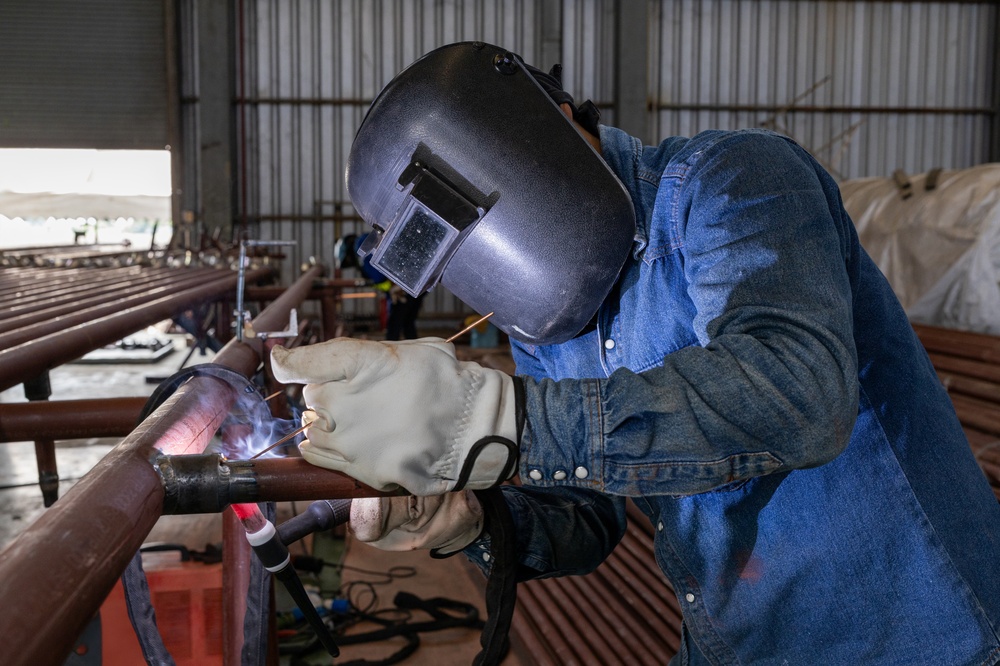
Welders Worked at the Center of Nearly Every Asbestos-Heavy Industry in America

Welding built this country. Ships, bridges, boilers, pipelines, power plants, refineries, skyscrapers, and factories were all stitched together by welders laying down steady seams in conditions most people couldn’t tolerate for an hour. It was hot, demanding, skilled work that required concentration and craftsmanship.

It was also work that placed welders directly in the path of asbestos for most of the 20th century. The blankets were used to contain sparks. The protective gear shielded them from heat. The rods they burned. The insulation on the pipes, tanks, and vessels they welded. The structures around them. All of it, for decades, was loaded with asbestos fibers that drifted through the air with every arc, every grind, and every tear-out.

If you spent years behind a welding hood, or if your father, husband, or grandfather did, and a diagnosis has now brought asbestos into the conversation, you’re in the right place. Mesothelioma, lung cancer, and asbestosis are showing up now in retired welders who spent their careers doing skilled work and were never warned about what was in the materials they handled.

You deserve real answers, and you have options.

Arrange a Free, Confidential Conversation Anytime

The attorneys at Lipsitz, Ponterio & Comerford have spent decades representing welders and their families in asbestos cases across Western New York and beyond. You pay no fee unless we win. Call (716) 849-0701 or request a free case evaluation to speak with someone who knows this industry and knows what your family is facing.

Asbestos Exposure and Welders - Lipsitz, Ponterio & Comerford, LLC

Why Welding Carries Such High Asbestos Risk

Welding and asbestos were, for most of the 20th century, inseparable. Welding generates extreme heat, molten metal, showers of sparks, and slag that drops and splashes. To control those hazards, welders and the industries that employed them relied heavily on asbestos, a material that was cheap, fireproof, and widely available.

Asbestos showed up in the welder’s own gear. It showed up in the materials used to contain the hot work. It showed up in the insulation on the pipes, tanks, and vessels being welded. And it showed up in the surrounding environment, because welders rarely worked alone. They worked alongside insulators, pipefitters, boilermakers, and laborers, all of whom were cutting, tearing, and grinding their own asbestos-containing materials just a few feet away.

The manufacturers of welding rods, welding blankets, protective gear, and industrial insulation knew by the 1930s and certainly by the 1950s that asbestos caused deadly disease. Internal memos, suppressed studies, and industry correspondence showed it clearly. Most manufacturers chose to ignore the hazards and kept selling. Welders paid the price.

Where Welders Encountered Asbestos on the Job

Welding Rods and Electrodes

Many welding rods, particularly those used for heavy steel work, contained asbestos in their flux coatings. As the rod burned, asbestos fibers were released directly into the breathing zone of the welder. The welder’s face, inches from the arc, drew in the fibers that came loose.

Welding Blankets, Pads, and Curtains

Welders used asbestos blankets and pads to shield surrounding surfaces from sparks, slag, and splatter. Every time a blanket was moved, folded, shaken out, or thrown down on the floor, asbestos fibers were released into the air. Some blankets were used for years, accumulating damage that made them even more friable with time.

Protective Clothing and Equipment

Welding aprons, gloves, mitts, spats, jackets, sleeves, bib covers, and hoods were frequently made with woven asbestos for heat resistance. The very gear meant to protect welders from burns was exposing them to fibers every shift. When that gear became damaged or worn, fibers shed more freely.

Pipe, Tank, and Vessel Insulation

Welders on industrial projects, whether in refineries, power plants, shipyards, or manufacturing facilities, spent their days welding on pipes, tanks, and vessels that were either already insulated or about to be. Insulators worked alongside welders. When insulation was torn off to make a weld, or applied after the weld was complete, fibers filled the air.

Boiler and Furnace Work

Boilermakers and welders who repaired or built boilers, furnaces, and refractory-lined equipment worked directly with asbestos-containing cement, gaskets, rope seals, and refractory products. Tearing out old linings and installing new ones created some of the heaviest exposure encountered in any trade.

Shipyard Welding

Welders who worked in Navy shipyards, commercial shipyards, and on dry-docked vessels encountered asbestos in virtually every corner of the ship. Engine rooms, boiler rooms, pipe runs, bulkheads, and overhead were saturated with asbestos insulation and fireproofing. Given the number of exposure points, shipyard welders are among the most heavily affected occupations for mesothelioma in the country.

Steel Mills, Foundries, and Heavy Industry

Welders in steel mills, foundries, paper mills, and heavy manufacturing facilities were exposed to asbestos in furnace linings, ladle covers, ingot mold coatings, pipe insulation, and structural fireproofing. The combination of high heat and aging infrastructure created constant sources of airborne fibers.

Construction Welding

Structural welders, ironworkers, and field welders on commercial and industrial construction sites were exposed through spray-on fireproofing applied overhead and on structural steel, pipe insulation being cut and installed nearby, and asbestos-containing gaskets and joint compounds used in mechanical systems.

Grinding and Cutting Materials

Welders often ground, cut, or beveled metal that had asbestos insulation still attached, or that sat adjacent to asbestos materials. Grinding wheels and cutoff saws released clouds of fibers when they contacted or disturbed these materials.

The Welding Specialties and Work Settings Most at Risk

If you or your loved one worked in any of the following welding roles or settings, it’s worth exploring possible asbestos exposure:

  • Shipyard welders (Navy and commercial)
  • Boilermakers and boiler welders
  • Steel mill welders and millwrights who welded
  • Pipefitter-welders and pipeline welders
  • Structural and ironworker welders
  • Construction welders on commercial and industrial projects
  • Refinery and petrochemical plant welders
  • Power plant welders and maintenance welders
  • Paper mill and manufacturing plant welders
  • Railroad welders and locomotive shop welders
  • Tank and pressure vessel welders
  • Welders’ helpers and apprentices
  • Retired welders who worked pre-1980 in any of the above settings

Asbestos exposure didn’t always end at the job site. Welders carried asbestos fibers home on their coveralls, gloves, boots, and hair. These fibers have been linked to mesothelioma in spouses and children who were never directly involved in welding.

If any of this sounds familiar, a conversation with our firm is free and comes with no obligation. You can reach Lipsitz, Ponterio & Comerford directly at (716) 849-0701.

The Diseases Linked to Asbestos Exposure in Welders

Asbestos-related diseases often take decades to appear. For welders, that means exposure from years spent working with high-heat materials and insulation in confined industrial spaces may not surface until long after the job is done.

A welder who worked in shipyards in 1965 may not feel his first symptom until 2005 or later. By the time symptoms develop, the connection to welding work isn’t always obvious, but the diseases tied to that exposure are serious. They include:

If you or a loved one spent years welding and later received one of these diagnoses, it’s worth understanding whether asbestos exposure at work played a role.

Why Timing Matters for Welders and Their Families

New York law limits how long you have to file an asbestos-related claim. For welders, that timeline typically begins at diagnosis, or at death in wrongful death cases.

But legal deadlines are only part of the picture. Welding jobs often took place across multiple sites—shipyards, power plants, construction projects—making exposure history harder to piece together over time. Coworkers move on, job records disappear, and key details fade.

Starting the conversation early helps preserve that history and protects your ability to take action.

What a Claim Looks Like for Welders

For many welders, the hesitation to reach out to for legal assistance comes from not knowing what the process actually involves, or assuming it will be complicated or confrontational. Here’s the reality:

  • You’re usually not suing your employer. Claims are typically filed against the manufacturers of asbestos-containing materials, such as welding rods, blankets, insulation, and protective gear.
  • There are no upfront costs. Cases are handled on contingency. That means you pay nothing unless compensation is recovered.
  • Most families don’t step foot in a courtroom. Most cases are resolved through settlements or asbestos trust funds, rather than at trial.

Why Welders Turn to Lipsitz, Ponterio & Comerford

Welders worked in some of the most asbestos-heavy environments in American industry.

Lipsitz, Ponterio & Comerford has spent decades representing tradesmen exposed under those conditions. That experience means:

  • Knowledge of welding environments across shipyards, plants, and construction sites
  • Familiarity with asbestos-containing welding materials and surrounding equipment
  • Access to experts who can document exposure history and link the exposure to your illness

This is focused work built around representing workers who were exposed on the job without being fully informed of the risks.

Wondering if You Have a Case? Start With a Simple Conversation

If you or someone in your family worked as a welder and later developed an asbestos-related illness, it’s normal to have questions.

A free consultation is a straightforward way to get answers. You’ll learn whether your welding work may be connected to your diagnosis and what steps, if any, make sense for you.

Call (716) 849-0701 or request a confidential consultation online. There’s no cost and no obligation. You’ll speak with someone who understands these cases and can give you clear, straightforward answers.

Lipsitz, Ponterio & Comerford, LLC. Representing workers and families across Western and Central New York in mesothelioma, asbestos, and talc-related cases.