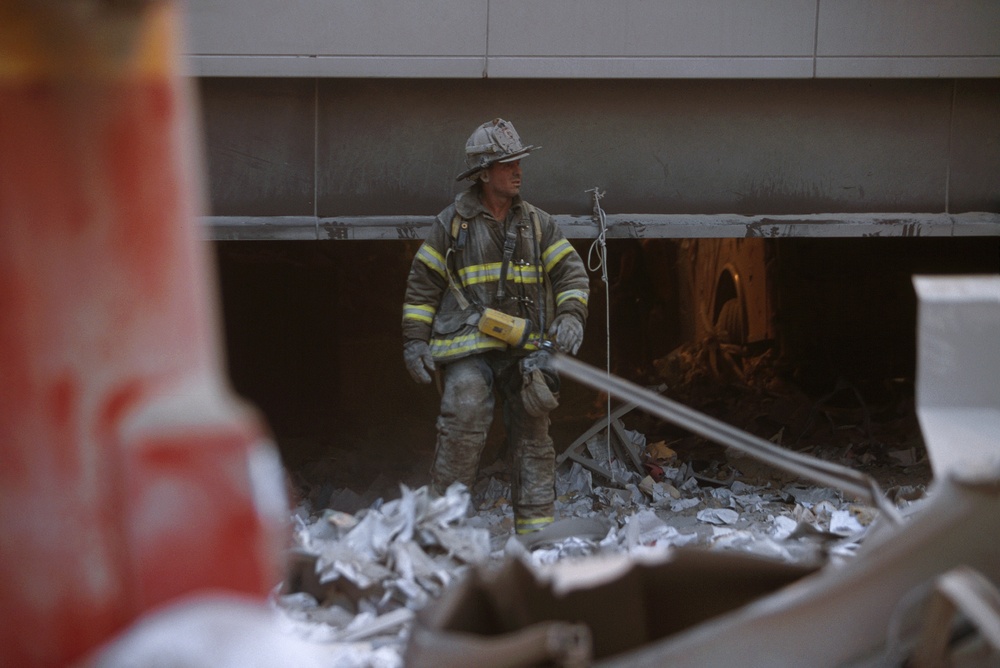
Firefighters Have Spent Decades Running Into Buildings Full of Asbestos

Firefighters are trained to run toward what everyone else runs from. They pull people out of burning homes, they pry open collapsed structures, they climb into smoke-choked buildings and breathe whatever the fire has released into the air. It is dangerous but necessary work. The public owes a debt to every person who has ever put on the turnout gear and answered the call.

What the public rarely understands, and what many firefighters themselves were never told, is that the hazards of the job go well beyond the flames and the smoke. For decades, firefighters have been walking into buildings loaded with asbestos. When a fire damages a structure, when a roof collapses, when walls are breached with an axe or a Halligan, asbestos-containing materials are disturbed. Insulation, floor tile, ceiling panels, pipe lagging, fireproofing, and countless other products release fibers into the air. Firefighters breathe those fibers, often without a mask, and carry them home on their gear.

If you served as a firefighter, or if someone in your family did, and a diagnosis has now brought asbestos into the conversation, you may have questions. Mesothelioma, lung cancer, and asbestosis are increasingly being diagnosed in retired firefighters who spent decades protecting their communities while unknowingly facing asbestos exposure.

You deserve clear information about what this means and what steps may be available to you.

Book a Free, Confidential Conversation Now

For decades, Lipsitz, Ponterio & Comerford has focused on helping workers and families affected by asbestos exposure throughout Western New York and beyond.

You pay nothing unless compensation is recovered on your behalf. Call (716) 849-0701 or request a free case review to speak with someone experienced in these cases.

Why Firefighting Carries Significant Asbestos Risk

American buildings, especially those built between the 1930s and the 1980s, contained asbestos: Pipe insulation. Boiler insulation. Floor tile and mastic. Ceiling tile. Joint compound. Roofing products. Fireproofing sprayed on structural steel. Gaskets on industrial equipment. HVAC duct wrap. Older commercial and residential structures are essentially asbestos time capsules, and fires within them  release asbestos into the air.

When a fire burns, building materials are destroyed. Ceilings fall. Walls open up. Pipe insulation cracks and sheds. Fireproofing flakes off structural steel. The mechanical ventilation of heat and smoke carries those fibers through every room in the structure. Firefighters enter that environment to put the fire out and to search for victims. The air surrounding them is thick with asbestos fibers that have just been liberated by fire damage.

The exposure does not end when the fire does. During overhaul, the phase after extinguishment when crews go through the building looking for hidden fires and beginning the process of making the structure safe, firefighters often remove their SCBA masks. That is exactly when airborne asbestos concentrations can still be high. Many firefighters of previous generations never used respiratory protection during overhaul at all.

The turnout gear itself has historically been a source of exposure. Heat-resistant components in older firefighting gear sometimes contained asbestos. Gear was also contaminated with asbestos fibers from fire scenes, and those fibers stayed on the gear, in lockers, in fire station laundry rooms, and in the cabs of apparatus for years.

Asbestos Exposure and Firefighters

Where Firefighters Encounter Asbestos on the Job

Structure Fires in Older Buildings

Residential homes, apartment buildings, commercial structures, schools, hospitals, and industrial facilities built before the late 1980s routinely contain asbestos in pipe insulation, floor tile, ceiling tile, joint compound, roofing felt, and mechanical system components. Every fire in these structures releases asbestos fibers into the air where firefighters work.

Industrial and Commercial Fires

Fires at factories, refineries, power plants, and warehouses can bring firefighters into contact with asbestos used in industrial insulation, gaskets, fireproofing, boiler systems, and process equipment. The asbestos content in these settings is often higher than in residential buildings.

Overhaul Operations

The period after a fire is out, when crews tear open walls and ceilings to check for extension and begin clearing the scene, is one of the highest-exposure phases of any firefighting operation. Firefighters often work this phase without respiratory protection, breathing air still saturated with asbestos fibers.

Collapsed Structures and Search Operations

Structural collapses, whether caused by fire, weather, or other emergencies, expose firefighters to whatever is inside the walls, ceilings, and mechanical systems of the building. Search and rescue operations often require hours of work in debris fields heavy with asbestos-containing materials.

Firehouse and Station Exposure

Older fire stations themselves frequently contain asbestos in pipe insulation, boiler systems, ceiling tile, and floor tile. Firefighters spend their shifts, often 24 hours at a time, in buildings that are themselves sources of exposure.

Contaminated Gear and Equipment

Turnout gear, helmets, gloves, boots, and hood components in older sets sometimes contain asbestos. More importantly, gear picks up asbestos contamination from fire scenes and carries it back to the station, where it sits in lockers and hangs in apparatus bays. Hoods and gloves worn for overhaul or wildland fires are often not cleaned between incidents.

Apparatus and Equipment Maintenance

Brake shoes, clutch components, gaskets, and heat shields on older fire apparatus commonly contain asbestos. Firefighters and fire mechanics who service this equipment are exposed during inspection, repair, and replacement work.

Wildland Fires and Vehicle Fires

Wildland-urban interface fires, vehicle fires, and fires in outbuildings often involve asbestos in roofing, brake components, and building materials. Firefighters working without full respiratory protection in these settings are exposed to fibers released by burning and heated asbestos materials.

The Firefighting Roles and Career Paths Most at Risk

If you or someone in your family served in any of the following firefighting roles or settings, it’s worth taking a closer look at possible asbestos exposure:

  • Career firefighters with municipal fire departments
  • Volunteer firefighters serving in smaller communities across WNY
  • Fire officers and company officers who led interior operations
  • Engine company and truck company firefighters
  • Rescue and squad company personnel
  • Fire inspectors and fire marshals who entered fire-damaged structures
  • Arson investigators working fire scenes
  • Fire mechanics and apparatus maintenance personnel
  • Industrial firefighters at refineries, shipyards, and large manufacturing sites
  • Military firefighters (Navy, Air Force, Army)
  • Airport firefighters and ARFF personnel
  • Wildland firefighters working structure protection in the WUI
  • Retired firefighters who served pre-2000 in any of the above roles

For many firefighters, exposure followed them home. Fibers clung to gear, clothing, and hair, creating a second layer of risk for the people closest to them. In some cases, that exposure has led to mesothelioma in spouses and children with no direct connection to firefighting.

If you have questions that you would like to discuss with the lawyers at Lipsitz, Ponterio & Comerford at no cost, call us at (716) 849-0701 to learn more.

The Diseases Linked to Asbestos Exposure in Firefighters

Decades of running into asbestos-laden buildings has left many firefighters and their families facing serious diagnoses later in life. The diseases most commonly linked to asbestos exposure include:

These conditions typically take 20 to 50 years to develop after exposure, which is why retired firefighters are being diagnosed today for work they did in the 1970s, 1980s, and 1990s. Families who were exposed to take-home fibers on gear and uniforms are also at risk.

Why Quick Legal Action Is Key

Asbestos-related diseases have strict legal deadlines called statutes of limitations. In New York, the window to file a claim generally begins when a diagnosis is made or, in wrongful death cases, at the time of death.

Waiting, even for a short time, can put compensation out of reach permanently. Early action also allows attorneys to gather evidence while witnesses are available and records still exist.

A diagnosis is overwhelming, and the last thing most people want is to think about legal claims. But the sooner a conversation happens, the more options remain available to you and your family.

What Pursuing a Claim Actually Involves

Many firefighters and their families assume that filing an asbestos claim means suing the fire department or the city. It rarely works that way. Claims are typically brought against the manufacturers of asbestos-containing products—the companies that made the insulation, the floor tile, the fireproofing, the gaskets—not against employers or municipalities. Those manufacturers knew their products contained asbestos, and many continued selling them long after the health risks were established.

The process begins with a conversation about work history. An attorney will want to understand where you worked, what kinds of fires you responded to, what gear and equipment you used, and what buildings you spent time in. That information is used to build a picture of when and how exposure occurred and to identify which manufacturers bear responsibility. You do not need to remember every detail. Attorneys who handle these cases are experienced at piecing together exposure history from employment records, union records, fire department logs, and the accounts of colleagues who worked alongside you.

Most asbestos cases resolve through settlement rather than trial. Compensation can cover medical expenses, lost income, pain and suffering, and in cases involving a death, losses suffered by the family.

When you work with Lipsitz, Ponterio & Comerford, you don’t have to worry about upfront costs. We work on contingency, meaning there is no fee unless compensation is recovered on your behalf.

The goal of the process is to hold the right parties accountable and to get you and your family what you are owed.

Why Western New York Firefighters and Their Families Choose Lipsitz, Ponterio & Comerford

Lipsitz, Ponterio & Comerford has spent decades focused on asbestos litigation in Western and Central New York and understands the specific work histories, job sites, and industries that put local firefighters at risk. Our firm handles every aspect of the case, from identifying responsible manufacturers to securing compensation for medical expenses, lost income, and pain and suffering. Clients are never charged unless the firm recovers on their behalf.

For families navigating a serious diagnosis while also trying to understand a complicated legal process, it is critical to hire experienced attorneys. It means having someone who can tell you honestly whether you have a case, what it might be worth, and what to expect throughout the process. It means the paperwork, the research, and the legal strategy are handled for you. And it means you can focus on your health and your family, knowing that someone with decades of experience is fighting for what you are owed.

One Phone Call Answers More Questions Than You Think

Lipsitz, Ponterio & Comerford offers free, confidential consultations with no obligation to proceed. Firefighters who spent their careers protecting others deserve to know their options. So do the spouses, children, and families who lived with the exposure risk without ever knowing it. Call (716) 849-0701 or request a free case evaluation to start the conversation.

Lipsitz, Ponterio & Comerford, LLC. Representing workers and families across Western and Central New York in mesothelioma, asbestos, and talc-related cases.