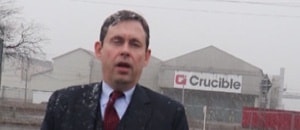
History of Crucible Steel
The history of Crucible Steel in Syracuse, New York, dates back nearly 150 years. Its roots were established in 1876, when the Sanderson Brothers of Sheffield, England, acquired the Sweet Iron Works in Syracuse and established a steelmaking operation there. The Syracuse facility ultimately became part of the Crucible Steel Company of America, which was formed in 1900 through the consolidation of thirteen American crucible-steel companies.
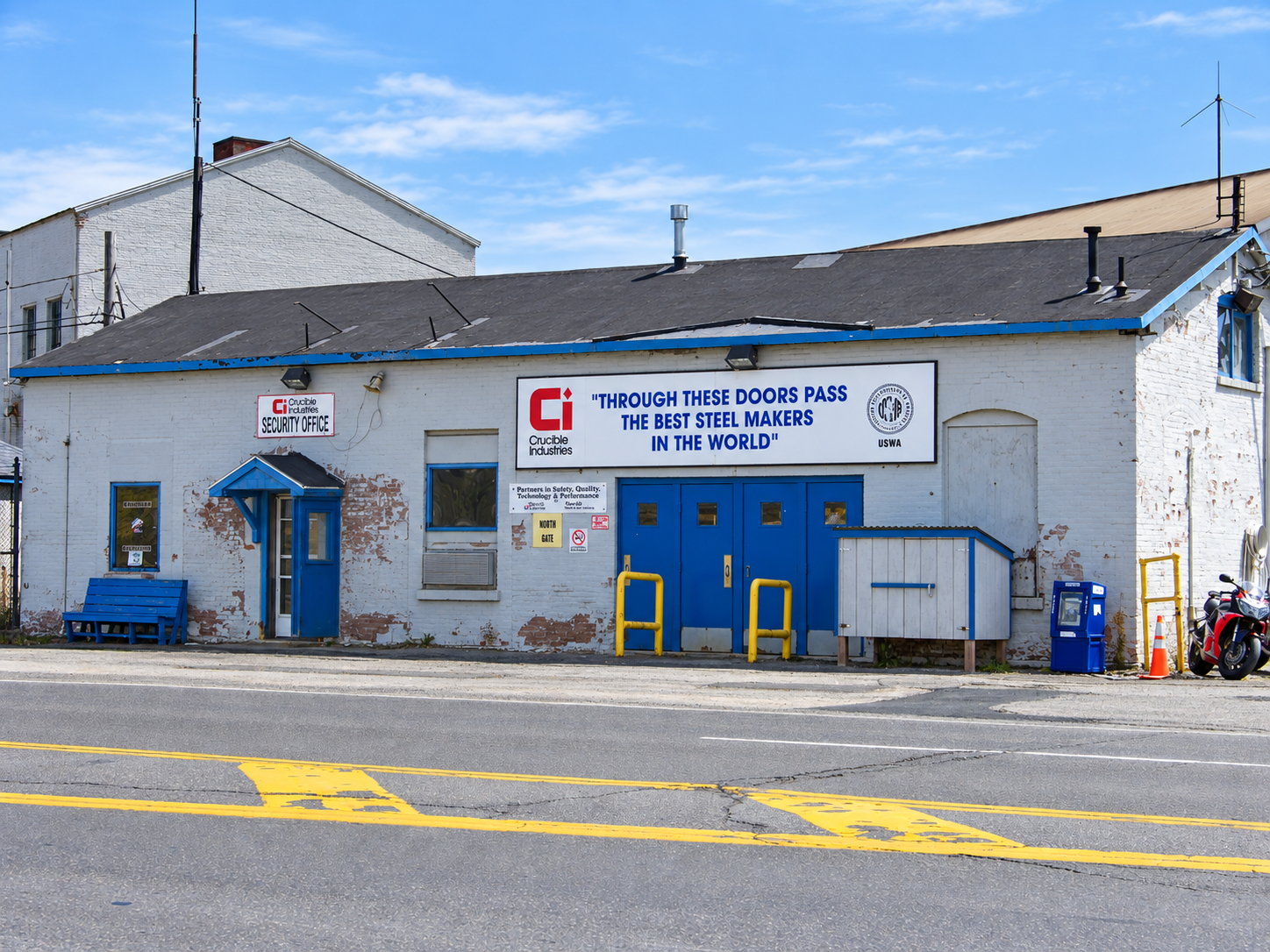
Crucible became an important center for the development of specialty and tool steels in the United States.
In 1883, it became the first steel mill in North America to use gas fired furnaces for the production of tool steel.
Crucible continued to advance its manufacturing capabilities and in 1906 it became the first steel mill that installed an electric arc furnace.
In 1907, Crucible created the first patented vanadium high speed steel.
Crucible continued to invent and patent materials for the next one hundred years, including its commercial production of vacuum arc remelted steels; the creation of free-machining stainless steels; becoming the first company to develop P/M high-speed tool steels; and, patenting the proprietary process for making steel (The Proprietary CPM Process) that allows the final product to be of a much higher purity.
Because Crucible had become a leader in the development of innovative products, Crucible Research was founded in 1929 and became the primary center for research within the company. Crucible continued to research and develop new materials, including the world’s first commercial powder metal tool steel and development of a titanium atomizer.
In 1968, Colt Industries acquired Crucible Steel, and the Syracuse operation became part of Colt's Crucible Specialty Metals Division. During the 1970s and 1980s, changes in the American steel industry resulted in plant closures and consolidation.
In 1985, after a buyout from Colt Industries that was initiated by its employees, the Crucible Materials Corporation was founded. The Crucible Materials Corporation became an independent entity with a new focus, the production of high- grade specialty steel.
On May 6 2009, the Crucible Materials Corporation filed for Chapter 11 of the United States Bankruptcy Code because of the resulting drop in demand for Crucible’s products, especially with regard to the automotive industry.
In October 2009, the operating assets of the Crucible Specialty Metals Division were purchased by JP Industries, a Cleveland-based private-equity group. The purchaser formed a new company, Crucible Industries LLC. The Syracuse-area steel operation subsequently resumed production under the Crucible Industries name.
During the following years, Crucible Industries continued to manufacture specialty steels, including high-speed, stainless and tool steels, and remained particularly known for its Crucible Particle Metallurgy products. The company supplied steels for applications including tooling, automotive components, aerospace products, industrial equipment and cutlery.
The company encountered renewed financial difficulties in 2024. On December 12, 2024, Crucible Industries LLC filed for Chapter 11 bankruptcy protection in the United States Bankruptcy Court for the Northern District of New York.
On May 30, 2025, the bankruptcy case was converted from Chapter 11 to Chapter 7, placing the remaining company into liquidation.
The closing of the Crucible Industries operation marked the end of more than a century of continuous specialty-steel manufacturing at the Syracuse-area site.
Crucible Steel and Asbestos Exposure
During the many decades in which Crucible operated as a steel manufacturer, asbestos-containing materials were used throughout the facility. Asbestos was commonly incorporated into insulation and refractory materials because of its resistance to heat.
The extensive history of the Crucible Steel operation is significant when evaluating potential occupational asbestos exposure because the facility operated for generations, under several corporate names, while steelmaking technology, equipment and ownership changed over time. Former employees and contractors may therefore have worked at the facility during different periods and in different areas of the plant.
For more information about asbestos exposure at Crucible Steel and your legal rights, see Crucible Steel in Syracuse, New York.